Culture & dance history
The Origins
The history of the human, racial, and cultural synthesis that gave rise to Cuban music and dance over the course of many decades.
The Origins
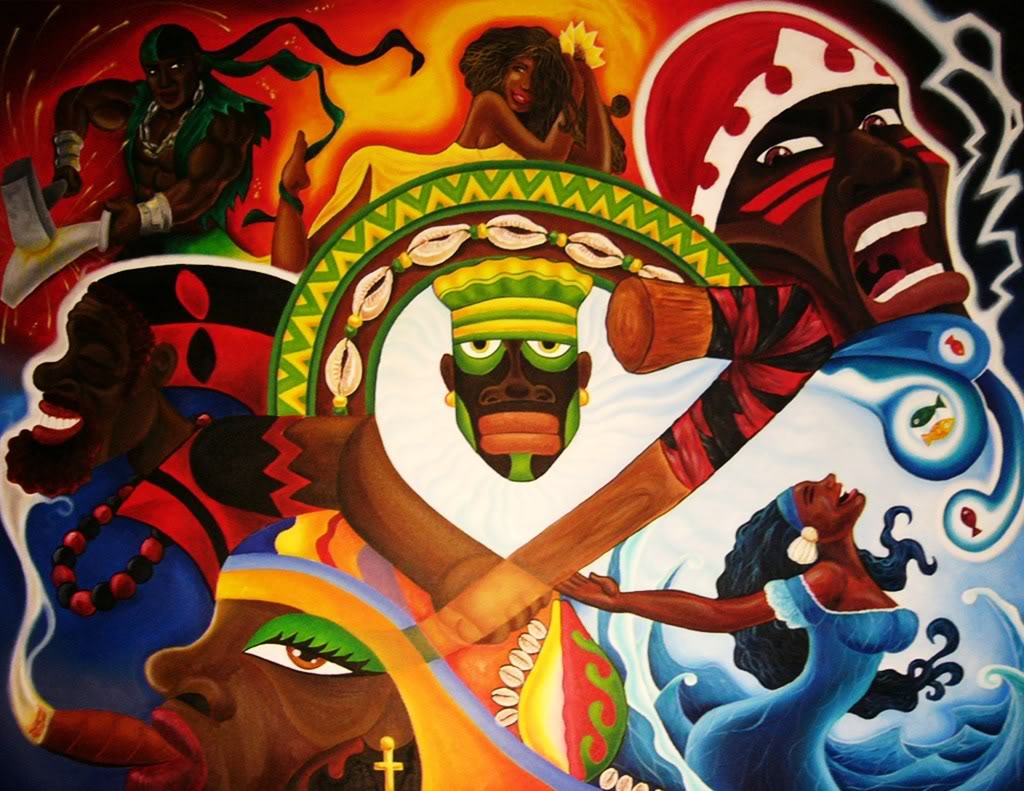
It is the history of the human, racial, and cultural synthesis that took place in Cuba over the course of many decades. The binary rhythm, typical of African dances, which facilitates the spontaneity of the body’s movements, freeing the remarkable resources of instinct. The sensual and erotic charge, also of African provenance; the widespread use of syncopation, introduced by the Black populations. The European melody filtered through the Spanish cultural and artistic components. All of this is Cuban music: to it one must add the climatic factor, which plays a decisive role in determining the relationships between human beings and nature. To this must be added the ancient ritual customs of the Cuban populations, who have always worshipped natural divinities: the god of war, the goddess of the sea, the god of lightning and thunder. The worship of these gods had its culminating moment in ritual dances. White and red symbolized the sexual sphere. Men danced in honor of Changó, king of lightning and sensuality (all the movements of the arms started from the sky as if they wanted to grab the lightning bolts and concentrated in the pelvic region, so that greater energy would be given to one’s own virility). In religious dances, gesture played an important part. Beginning in the 18th century, the Cuban people began to develop dances studied in their theoretical, musical, and stylistic aspects, starting from the richness of the choreic and choreographic elements brought by the various ethnic groups.
Conga: Brought to Cuba from Africa and then developed in Brazil. Many figures of the Samba derive from the Conga. It takes its name from the large drums used for the coronation of tribal chiefs or solemn ceremonies. A festive crowd in the streets – three lateral steps plus a fourth closing step – arroyado (arroyo = stream, or arrojar = to throw, to toss away).
French Contradance: In the 1600s in England the country dance was born, which developed and became fashionable in the 1700s and 1800s in the European courts as the contradance (also written by Mozart). At the end of the 1700s it was brought to Cuba by French colonists fleeing from Haiti. A group dance characterized by rigid and heavy movements and an introduction with couples arm in arm, in a promenade style.
Habanera: From Spain or from Africa? From it derive the Tango and Rumba.
Danzón: An aristocratic attitude (invented to mock the rigid foreign bourgeoisie). Slower than the contradance but richer, it was a couple’s dance. Introduction of winds and violins (a promenade with greetings), then percussion (pailas) and a single basic step on a square for a phrase of 32 measures.
Danzonete: Evolution of the danzón (retaining its introduction) with the influence of Son: it accelerates the rhythm. The movements are more fluid, with bending of the legs. Choreographic variants – rotation of the lady around the gentleman – Tornillo (screw/spiral).
Bolero: From Spain to Cuba, transformed by the contamination of Son. From moderate ternary to binary. Relaxing and romantic. It is danced close together.