Culture & dance history
The mambo
From Cuban folklore to the Palladium in New York: the story of the mambo, the most frenzied of Latin dances, made legendary by Perez Prado and Tito Puente.
The mambo
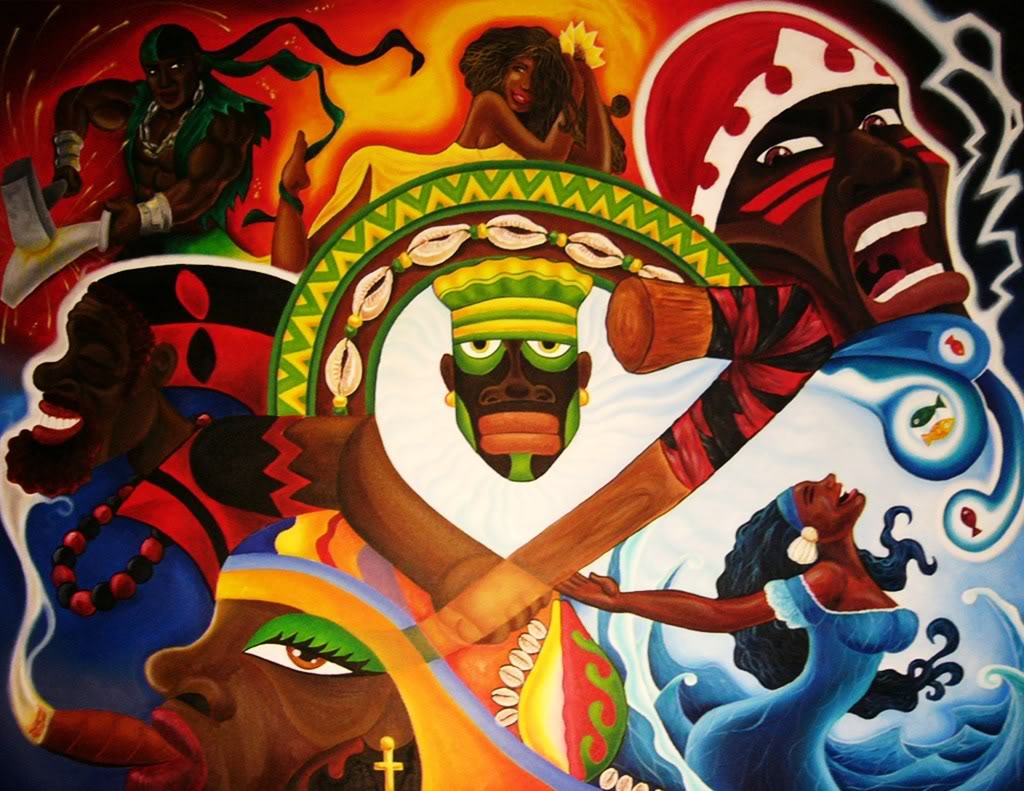
Mambo is the name of a Cuban divinity that has been identified with the god of war.
According to some musicologists, mambos is the equivalent of “priestesses”. The two most credited hypotheses at present are: 1- The term belongs to the ritual voodoo language of Haiti (the mambo is that particular religious music which allows, through dance, conversation with the divinities); 2- The term belongs to an ancient Cuban dialect called nanigo (mambo is used to identify both the music and its accompanying dance).
The mambo was born from the slaves’ desire to “cut loose” in the truest sense of the word: once freed from their chains, they invented the most frenzied of dances. With chains on their feet they invented: the merengue, whose fundamental step consisted of transferring the body’s weight from one foot to the other, even while staying in the same place; the rumba, which in its original form was based solely on the swaying movements of the hips.
When they finally freed themselves from their chains, they invented the mambo. On the choreographic level, the break from the son occurred on the fundamental figure, which can be considered basic. The son had a slower rhythm than the mambo: it was danced with horizontal movements (to the right and to the left).
With the acceleration of the rhythm that marked the evolution toward the mambo, it was not possible to maintain the horizontal direction of the figure without losing in terms of harmony and balance. For this reason the dancers invented, for the mambo, the vertical step (forward and back).
The birth of the dance with those characteristics that still make it unique and current today can be placed around 1940. Two concurrent factors determined the structure of the dance: the evolution of the musical instruments; the introduction of syncopated motifs in the final part of the danzòn.
As time passed, the term mambo unequivocally came to identify a particular way of dancing, referring specifically to popular Cuban folklore.
The dance presented itself rather as a container full of ideas drawn from the son and the danzòn, mixed over frenzied rhythms. The flexible structure of the dance allowed for its later enrichment, through the assimilation of African elements and of motifs belonging to jazz culture. In 1938 Oreste Lopez composed a danzòn with a markedly syncopated motif that he christened “Mambo”.
Arsenio Rodriguez combined elements taken from the original son with Cuban religious music of Voodoo derivation, and created a “danzòn en nuevo ritmo”, immediately afterward named mambo. (Naturally, it was an experiment.) Antonio Arcagno (or Arcano) decided to support the new rhythm with the piano.
Darnase Perez Prado, born in Matanzas in 1922, considered the true father of the mambo, upon listening to and trying out this rhythm, sensed that a new genre could be born from it. He made his debut in Havana with the Orquesta del Casino de la Playa, aiming for a mambo backed by the richest instrumentation possible at that time. At thirty-two he moved to New York, where in a short time he was crowned “King of the mambo”.
The musical innovation of the mambo was to have the percussion instruments played in sync with the piano and the horns, over chords with rhythmic phrasings completely different from those used previously. Maracas, bongo, drum and guiro, joined with the trumpet (which is the typical instrument of jazz), gave, stylistically, the best possible solution to the percussion question.
The spread throughout the world of mambo music and its accompanying dance is owed to Celia Cruz, Frank Grillo, Xavier Cugat and Abbe Lane.
Tito Puente is one of its greatest representatives, together with his fellow Puerto Rican Tito Rodriguez. The mambo is Cuban because it was conceived in Cuba, and because Perez Darnase Prado is Cuban.
The mambo is American because it became great in the USA. The Palladium Ballroom, the largest hall in existence in the world at that time, made Perez Darnase Prado’s mambo the most beautiful and most beloved dance of all time.
Palladium: In the ’40s the most famous dance venue in New York was the Palladium, an enormous hall located on Broadway, the legendary district of theaters and music.
After years of splendor, however, the Palladium had begun its decline, and an American impresario, sensing the changing times, intuited that the mambo could bring the glorious venue back to the splendors of the past. The idea was interesting but undoubtedly risky, given the poor reputation that the Latin American community enjoyed. On Sunday afternoons, he launched the first dancing matinées dedicated to Latin music.
The Latin American community responded enthusiastically to the organizers’ call, coloring the magical Palladium with its joy. Within a year the Palladium was definitively consecrated to Caribbean rhythms.
It was precisely in those years that the Palladium established itself, together with the Conga and the Copacabana, as one of the most important temples of Latin music in New York. The first orchestras to share the Palladium stage with Machito’s Afrocubans were the Piccadilly Boys, of the timbalero Tito Puente, and the Mambo Devils, led by the famous singer Tito Rodrìguez.
The musical duels between the two Puerto Ricans became legendary. Puente, thanks to his skill as a timbalero, earned in those roaring years the deserved nickname of el rey del timbal, while Rodrìguez, thanks to the versatility of his voice, became the undisputed idol of the Latin community.
It was precisely at the Palladium that the first legends of Latin dance were born: the Mambo Aces (a duo made up of Anibal Vasquez and Joe “Tinani” Centeno), Ernie Ensley, Louis Maquina, Killer Joe Piro, Cuban Pete, Jo Jo Smith, Freddy Rios, Mike Ramos.
They were the undisputed leaders of this innovative dance, which drew heavily on the influence of swing, and of tap dance in particular. We were no longer faced with a sensual couples’ dance, but with a genuine display of virtuosity that called for long solos by each dancer, based on articulated steps that would be christened mambo shines, with particular reference to the ever-gleaming shoes of the dancers.
Ernie Ensley, a famous mambo dancer, recalls: “At the time the Palladium’s dance floor was divided into three sections: on the right were the inexperienced dancers, in the center the mediocre ones, and on the left the good ones.
When someone tried to invade a section that was not their own, they were thrown out with kicks and elbows.“ Over time, though, even the most beautiful fairy tales come to an end, and so in 1964 the legendary Palladium closed its doors.
The environment had become greatly degraded, and in the final years there had been numerous incidents and brawls among drunkards, to the point that its license to sell hard liquor had even been revoked.
The venue’s owners thus decided to sell the property, and today nothing remains of that glorious venue, whose memory has, however, remained indelible in the history of Latin music.